
A Growing Number of Executives are Using AI Clones to Get Work Done. Should PR Writers?
“Too much work to do? Have your digital twin handle it.” No, that’s not the plot of a sci-fi movie set centuries in the future—it’s a recent headline in The Wall Street Journal, highlighting an emerging business trend that is destined to become mainstream. A growing number of executives are training AI systems on their voices, thoughts and work examples to create agentic doppelgängers that can tackle their to-do lists.
The WSJ introduces “Reid AI,” an AI clone of LinkedIn co-founder Reid Hoffman. Trained on decades of Hoffman’s books, speeches, podcasts and articles, “real Reid” uses Reid AI for a variety of tasks, like answering questions from subordinates in the proper tone, but the co-founder even has a video version of Reid AI he deploys for media interviews and presentations. Though a human helps prepare them, Reid AI has even delivered more than 75 addresses on behalf of its human counterpart since 2024.
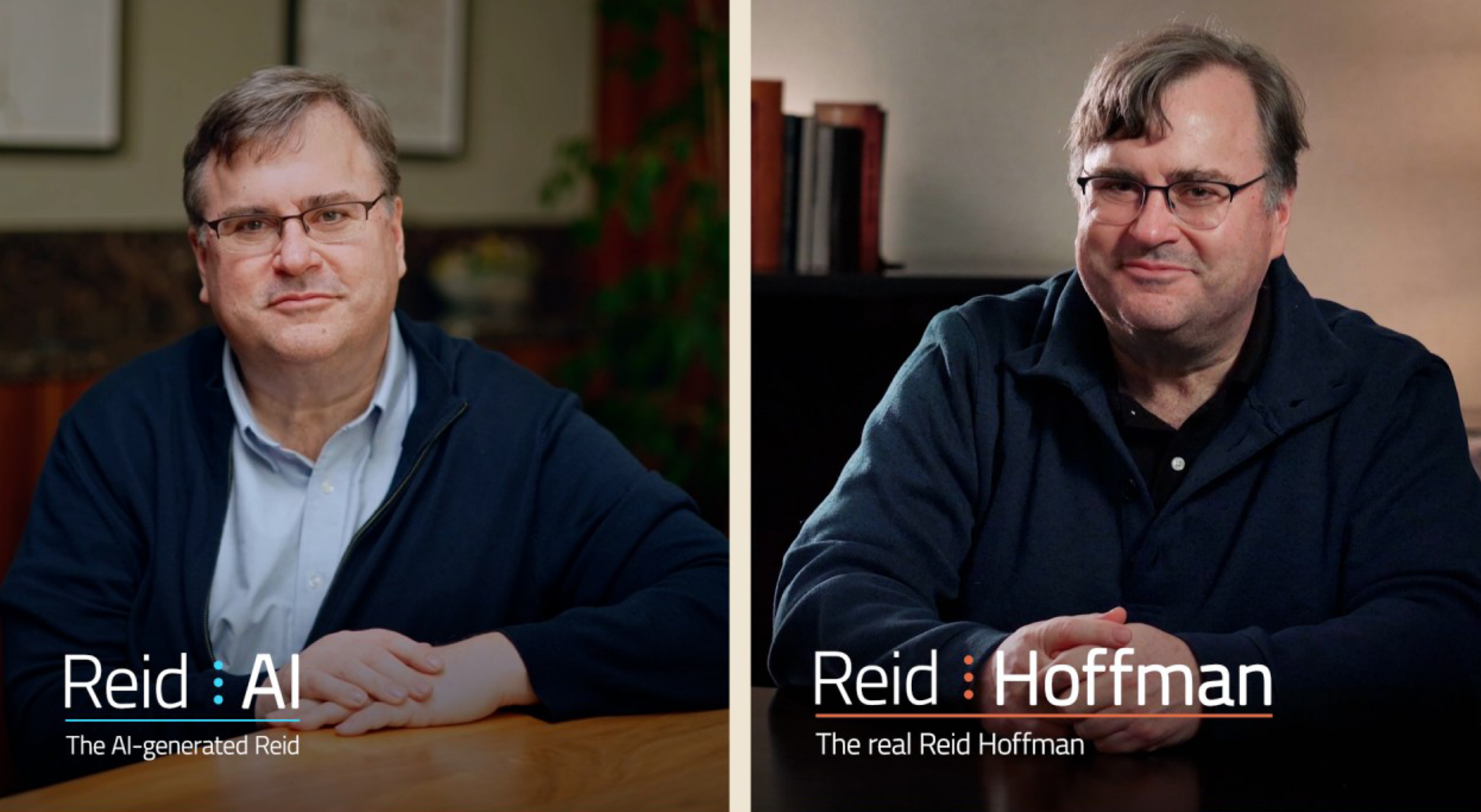
According to Reid, his AI double cuts his working time by 50% when deployed. Naturally, other executives are waking up to the potential benefits of following his lead. But for public relations writers, the rise of AI raises a different question. How much of the work behind thought leadership and content generation can (and should) we hand over to AI?
What are the downsides of AI-generated content in PR?
It’s a dilemma. On one hand, the productivity gains are hard to ignore. Successful SEO and GEO strategies demand frequent content updates. Social media channels demand a consistent stream of posts. Every publication requires a unique article written specifically for its audience. Sometimes, there simply isn’t enough time or bandwidth to get it all done, and that’s where AI has become invaluable.
On the other hand, AI-generated content doesn’t always land with audiences. A Prosper Insights & Analytics survey revealed that 55% of participants reported feeling uncomfortable with websites that rely heavily on AI-generated articles and stories. Another survey revealed that 25% of consumers would unfollow or block brands that publish AI-labeled content. Successful PR demands trust and authenticity, which makes the line between AI and human-generated content crucial.
Why is authenticity so important in thought leadership?
At its core, thought leadership programs exist to create thoughtful written materials that boost a company’s’ authority, credibility, and market position. While AI has its place in helping PR professionals and business executives move faster and potentially create more content, we can’t overlook the way it can undermine sincerity and trust.
AI writes in recognizable patterns. If you’re tired of reading the same recycled articles over and over again (you know, the ones full of “it’s not X; it’s Y” constructions), you’re not alone. It’s how we’ve ended up with a media landscape that feels formulaic and strikingly similar from one piece to the next. The question now becomes: how do you stand out as a unique voice?
This is especially important as more outlets refuse AI-generated content, using various “AI checkers” to vet pieces before they go live, and now, certain models will even flag AI-generated content themselves. Flagged articles might never get published, and subsequently, those publications may be less likely to take content from you in the future if they think you lean too heavily on AI.
Then, add regulatory shifts. To comply with the EU AI Act, Anthropic announced in August that future Claude models will generate invisible watermarks on text written by the AI assistant, and, according to the company, they’re not alone. Other major models will have to follow suit because the EU requires providers in their market to do so.
Most importantly, it’s worth acknowledging that AI often hallucinates, producing information that is entirely false or out of context. In those cases, the consequences extend far beyond a sour relationship or a forgettable article and damage your brand’s reputation.
How to use AI in PR thought leadership writing
LLMs excel at generating content in volume, but thought leadership isn’t just about putting more articles into the ether. Thought leadership that moves the needle requires time: original thinking, fact-checking and a developing point of view, which are AI’s biggest weaknesses. The act of physically writing thought leadership is time-consuming, sure, but what’s talked about less is the number of hours writers have to put in before they even put pen to paper (or fingers to keys). AI can significantly streamline the time-consuming ideation, preliminary research and organizing that comes before you can even begin an article.
When PR professionals can find prompts, workflows and guardrails that work for them, the technology can give back hours of research and planning time that are better spent developing unique points of view that move the needle.
- News scanning: AI can easily source and consolidate links to relevant news articles that you can either reference in your thought leadership or use to identify industry trends that your company might have a POV on.
- Distill information: Sometimes the best thought leadership topics come from lengthy texts, such as research reports or transcripts from an hours-long webinar. AI can process that information and pull together summaries and key takeaways for writers, helping inform their writing or guiding them to the specific section they should read in full.
- Outlining and article planning: One of the biggest challenges in thought leadership is figuring out how to turn an SME’s unstructured thoughts and your own scattered notes into a clear, compelling narrative. AI can help writers identify recurring themes, suggest article structures and generate starting points that accelerate the planning process for an organized story. That way writers can spend more time on the actual craft of writing—refining arguments, strengthening transitions and incorporating the executive’s unique tone into the piece.
Key Takeaways for PR Teams
While AI helps organizations move faster and do more with fewer resources, PR efforts shouldn’t sacrifice authority for speed when it comes to thought leadership. Ultimately, the ideas that build trust and influence still need to come from people.
AI can take time-consuming work off your plate, but the thinking, expertise and voices that makes your company worth listening to can’t be outsourced. As AI-generated content only becomes more common, genuine expertise will become infinitely more valuable, and so will the writers who know how to bring that thinking to life through their work.