• Media on the Move: Week of January 27, 2020

    Media on the Move: Week of January 27, 2020

    The Year Ahead in Media: Expect Consolidation, Audio, and a Look Toward Brand Equity

    Media consolidation was a common theme in 2019, but experts don’t think it’s over. Toward the end of last year, Vice Media Group acquired Refinery29, Group Nine acquired PopSugar, and Vox Media and New York Media combined — all within a two-month period. Looking ahead in the new decade, industry thought leaders say digital brands will continue to be bought up and acquired. 

    News consumption is changing, of course. Social media aside, audio is playing a bigger role than before with podcasts on the rise and streaming wars on the cusp of eruption. A report by Forrester predicts that podcast ads will hit $1 billion in media spend in 2020 and, as greater competition appears in streaming services, consumers will drive pricing wars and demand tiered service bundles. 

    While media businesses recognize that relying on advertising is not sustainable in the long-term, advertisements are remaining a high-margin business in the space. Sara Fischer, media reporter at Axios, which is an advertising-driven digital company, weighed in on this and more on the Digiday Podcast. 

    In 2020, she predicts, companies will need to tap into brand equity in order to build out a greater focus on consumers rather than relying on advertisements. Consumer subscriptions continue to present a challenge, but some publications are paving the way with successful brand equity– just think about the events led by Vogue with the Met Gala or Vanity Fair with New Establishment.

    It will certainly be a year — and a decade — to watch as changes sweep across media players from journalists to major conglomerates.

    Google

    • Google launched an audio news service for Google Assistant. The service will offer a customized news feed with content from CBS, Fox News, CNN, as well as other media partners.

    New York Times

    • Kevin Delaney joined the New York Times Opinion department after leaving his position as editor and co-CEO of Quartz in October.

    Guardian

    • Guardian Media Group has named a new CEO: academic publishing veteran Annette Thomas will assume the position starting in March.

    Business Insider

    • Amanda Perelli has launched a new weekly newsletter at Business Insider, “Influencer Dashboard,” focusing on YouTube, Instagram, and the influencer industry.
    • Martin Coulter has taken on the role of technology reporter, following a similar role as technology reporter at Financial Times.
    • Jennifer Ortakales became the small business reporter and assistant editor at Business Insider. She was previously an associate distribution editor for video at the publication.

    STAT

    • After five years as a senior health-tech correspondent at Business Insider, Erin Brodwin will join STAT as a health-tech reporter covering the healthcare ambitions of Apple, Amazon, Facebook, Google, and Microsoft.

    Bloomberg

    • Supriya Batra joined Bloomberg News as a digital news editor. She was previously a fact check reporting intern at AFP.

    STORES

    • STORES Magazine released its final print edition in the December issue.

    Axios

    • Joe Uchill has departed from his role as Cybersecurity reporter at Axios to operate as a freelancer.

    Verizon Media

    • Verizon Media Group laid off 150 staffers last month. Verizon’s portfolio of media brands includes Yahoo, AOL, TechCrunch and HuffPost.

    MIT Technology Review

    • Will Douglas Heaven has joined the MIT Tech Review as senior AI editor.

    Health IT Answers

    • The media sites HITECH Answers, Health Data Answers, and RCM Answers all merged into HealthITAnswers.net.

    Boston Common

    • Abby Bielagus started as Editor-in-Chief at Boston Common in the new year.

    Subscribe below to get the most recent media moves sent straight to your inbox!

  • Four Trends in Retail Tech to Keep in Mind Coming out of NRF

    Four Trends in Retail Tech to Keep in Mind Coming out of NRF

    That’s a wrap on NRF 2020 Retail’s Big Show! This year’s event brought together more than 40,000 people – from solution providers to Fortune 500 retailers – to share visionary ideas for retail and experience the latest technology that’s transforming the industry.

    Each year, Matter attends on behalf of our roster of retail tech clients. In addition to meeting with reporters, staffing media briefings and sitting in on informative keynotes, we also get the opportunity to explore the show floor. We’re always amazed at the new technologies that are helping retailers improve customer experience both instore and online. Below are a few themes and trends that stood out this year:

    Artificial intelligence (AI) is no longer just a buzzword. 

    AI and machine learning (ML) continue to be buzzworthy, but this year we witnessed many retailers putting the technology in action. Retailers and solution providers showcased how they are seeing noteworthy results from AI to reduce out-of-stock inventory, improve pricing models, predict demand and more.

    Starbucks president and CEO Kevin Johnson spoke in front of a packed audience about how the company is using AI to free up its employees, enable better engagement with customers and create more human interactions. While many are concerned about AI taking away jobs through the digitalization of everything, this is not necessarily the case. Retailers are using the technology to empower their employees, not replace them.

    Experiential retail is here to stay.

    Retailers are increasingly using new and unique in-store experiences to draw shoppers. For example, Barbara Carlson, senior director of global creative services for American Girl, spoke at NRF about how micro experiences in physical stores can have a major impact on customers and their brand loyalty. American Girl is a leader in this space – its stores offer doll hospitals for toy repairs, restaurants with seats for dolls, and even a salon where kids can get matching hairstyles with their dolls.

    With e-commerce on the rise, consumers need a reason to shop in-store. In 2020, retailers will focus on implementing these experiences to draw customers into their brick-and-mortar locations and make the case for why the physical store is still relevant.

    RFID is seeing widespread adoption.

    Several solution providers at NRF 2020 demonstrated RFID-based technology as tool for better inventory management practices.

    Omnichannel retail has proliferated in the past few years and retailers everywhere are now offering fulfillment solutions like “buy online, pick up instore” (BOPIS), curbside pickup, etc. Inventory visibility and management is critical to deliver on these initiatives and retailers are increasingly turning to RFID to do this. The technology’s ability to provide store associates with an accurate view of the products available in-store at any given time is unmatched and leads to fewer cancelled BOPIS orders, increased sales and a happier customer.

    The secondhand clothing trend is enabling sustainable retail. 

    Sustainable practices in retail are now more important than ever and retailers are investing in solutions that help them lower their carbon footprint. There’s also a growing trend among consumers to buy secondhand clothing at thrift shops or online marketplaces, like Poshmark and Threadup. The general concept with thrift shopping is that when you reuse and recycle clothing, less of it ends up in landfills or polluting the environment.

    Phil Graves, the head of corporate development at Patagonia, elaborated on the secondhand clothing trend in a session at NRF and highlighted how the company’s Worn Wear business has seen 40 percent growth in revenue and profitability since it launched in 2017.

    That’s our take on the trends coming out of NRF. What trends or developments at the show stood out to you this year? Let me know.

  • 4 Things To Get Right When Filming Presentations

    4 Things To Get Right When Filming Presentations

    Managing the run-up and execution of a live panel event, presentation or speech can be tough. With so much to worry about, it can be easy to forget just how valuable a video version of the presentation will be for the (likely much larger) audience not in the room. Events are ephemeral, but video preserves them as impactful, evergreen marketing resources for your organization. 

    But if you’re not experienced or watchful in this domain, you may not get what you were hoping for from the final video. Here are four pro tips that’ll make incorporating video capture into your live event as frictionless as humanly possible.


     /></p>
<h2><span style=1. Over Communicate and Avoid Assumptions
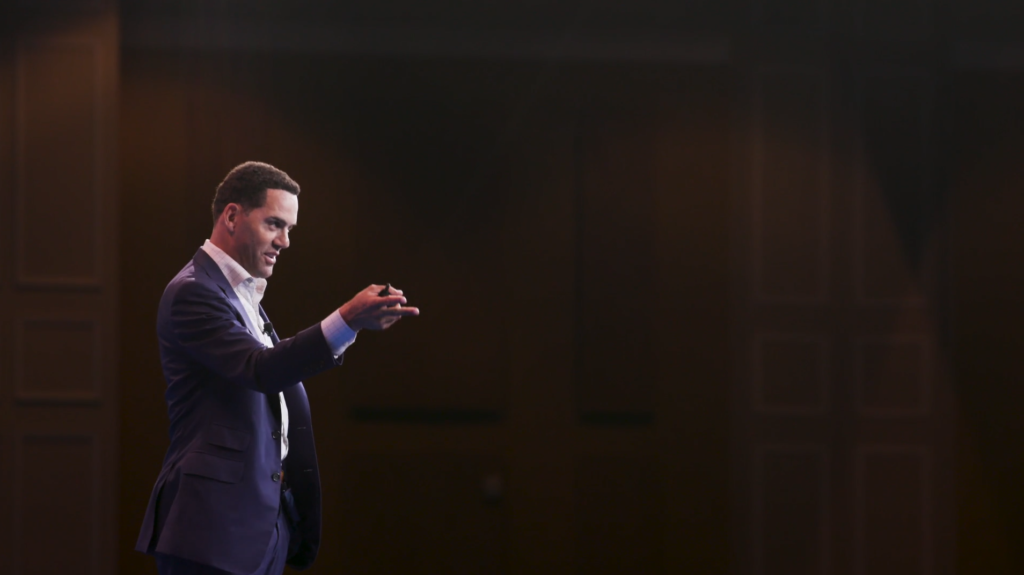
    You know what they say about assuming, so talk talk talk with your video vendor about exactly what you’re looking (and not looking) for. There are no shortcuts here – you’ll have to do some keen thinking about what your most important goals for the recap are:

    • Do you want the presentation filmed in its entirety, or just snippets for social media? (this informs how the videographer shoots)
    • Is it important to capture the audience’s reactions? (this can mean more cameras)
    • Do you need the Q&A recorded? (this can mean more audio legwork)
    • Will there be a projection screen, and does it need to be worked into the final video? (this can affect camera framing/composition)

    Every event is different, and your video vendor can’t read your mind. However, a good partner will proactively ask you all these questions (and more) in the run up to the event. If they’re not, run for the hills (and shoot us a line). There’s no such thing as too much information at this stage, and even seemingly small details or requests can have major implications on the filming strategy.


     /><br /><span style=2. Do a Dry-Run

    And yet, even with the best of intentions and preparations, unexpected issues can arise as every event space presents its own challenges. That’s why nothing beats an honest-to-goodness dry-run that puts the presenter, video team, and technology through their paces. It may seem like overkill depending on your event, but issues that could spell disaster if only noticed during the actual filming are usually simple, stress-free fixes in rehearsal. Head into your presentation with the kind of confidence that only comes from repetition. Your video team will be much more at ease, too.


     width=

    3. Audio is Everything

    Regardless of the kind of video shoot, great audio quality is one major (but often underappreciated) factor that separates amateur footage from professionally polished footage. Panels, presentations and speeches can be especially tricky from an audio perspective because there’s little opportunity to yell “CUT!” and replace dead batteries, reposition a misplaced microphone, and so on. So how can you help ensure your presentation sounds as good as it looks? 

    For one, make sure that the speaker is totally aware of how their voice will be captured — e.g., they could be mic’d with a small lapel/lavalier microphone, or they could be using a wireless handheld mic, or there might already be a microphone on the table capturing everything. There are unique considerations for the speaker(s) to keep in mind for each type of audio capture, so confirm that your video team has had a chance to brief the presenter on what they’ll need to do in order to avoid audio issues.


     /><br /><span style=4. The Dark Side of Lighting

    Ok…this one’s not really a tip, but lighting isn’t something we talk about enough when it comes to shooting presentations and speeches. Outside of performance spaces tailor made for filming live events, lighting to the camera’s ideal technical specifications in say, a Courtyard ballroom, may mean inviting some compromises you’re uncomfortable with: from the speaker feeling uneasy in front of the bright lights to reducing the legibility of the projection screen. Speaking of which, it’s often difficult to properly expose the camera for both the speaker and the bright screen, so we recommend incorporating any important slides into the edited video as cutaways.  

    Coming to a mutual understanding of the competing interests at play is a huge step in the right direction, so returning to point #1, simply aim to openly discuss the options with your video partner to find a mutually agreeable solution. You may be happier with slightly grainier footage than with obstructed audience views or a distracted speaker. Every presentation, space and client is different!


    Want to partner with a video team that already gets this stuff? Let’s work together to make the filming of your next big presentation or speech go off without a hitch. Start the process by filling out the simple form below to book a call with one of our video experts. We’ll discuss your specific challenges and needs, and if it seems like a good fit, we’ll come up with a plan to elevate your video marketing strategy together.