• 5 Questions to Ask Yourself Before Joining Another Social Platform

    5 Questions to Ask Yourself Before Joining Another Social Platform

    Ten years ago, if your business wanted to have a presence on social media, there weren’t many places to go.

    What a difference one decade can make. Facebook now boasts the world’s largest user base and an incredibly sophisticated ads platform. Instagram passed 600 million users. Snapchat grew to attract 50 million daily active users in five years. Plus, there’s Twitter, Pinterest and LinkedIn, each of which brings unique capabilities to the table.

    It’s nice to have options, but much like a restaurant where everything looks amazing, too many can be overwhelming.

    Before your organization joins another social channel, here are five key considerations:

    1. Do we have enough resources to manage another platform?

    Social media management is a lot of work. Even though publishing can be free, social still takes a significant investment of time and effort. Especially when starting a new account from scratch.

    So, before you jump headlong onto another platform, ask yourself: do we have the resources to do this and do it well? If there’s any doubt as to the answer, it might be better to focus your efforts on existing channels or think about bringing in an agency to help.

    2. Can we get more out of our existing social channels?

    If any business is looking to add a social platform, there should be a legitimate reason for doing so. Generating engagement on Facebook without any paid support is difficult, and isn’t getting any easier. That has a lot of businesses looking towards Instagram.

    Before jumping on Instagram, it’s worth asking: can we promote some of our Facebook posts with a modest budget each month? Even if it’s just $25 behind six posts, that will drive some great engagement without the added work of another channel, which could be a better route.

    3. What’s our plan for content?

    Publishing consistently is integral to being successful on social, and often times, the ease of jumping from one platform to another depends on how effectively you can re-purpose content. If you’re already on Facebook, for instance, you can use similar copy and the same images on Pinterest.

    It isn’t always so simple, however. Going from Pinterest to Twitter is a lot trickier, because Twitter revolves much more around conversation. When looking to add another social platform, be mindful of how well the new one will fit into your existing content production and strategic approach.

    4. Do we have the right process to support it?

    Process is a huge part of being on social media. Imagery, copy and strategy all typically involve various work flows and levels of approval, and a new social channel wouldn’t be any different.

    So, always consider how a new platform will fit into your processes. If each graphic needs to adhere to strict brand guidelines and be approved by three layers of creative, Snapchat is going to be tough, because the platform is designed to be quick, goofy and ephemeral.

    5. How will this help our business?

    The answer(s) to this question should guide social strategy for every organization. There are all kinds of business objectives that social can help achieve, from app downloads to website conversions to video views to brand awareness and much more.

    Looking for consumer engagement? Instagram can do that very efficiently. Want to drive traffic to your website? Facebook and Pinterest are the places to go. To be set up for success on social, you have to know what you want to accomplish. And if thinking about all that sounds intimidating, remember, there are people who can help.


  • Live Tweeting: What You Need to Know

    Live Tweeting: What You Need to Know

    If you keep up with the Matter Portland office on social media, you may already be aware that we recently attended TechFestNW, an event showcasing the Pacific Northwest as a digital and cultural hub.  As our office lead on social media, I thought the event offered us a great opportunity to engage with the local tech community as well as share our commentary for both our Instagram and Twitter accounts. While we engaged on both platforms throughout the event, we focused more of our attention on Twitter interaction, which would allow us to post more frequently during the event and provide a broader picture of happenings throughout the week. With the help of my colleagues, Nick, Anna and Lydia, on the ground, we live tweeted the two-day event, from key note speakers and award recognition to the afterhours VR-themed parties.

    In case you’re looking to do something similar for an upcoming event, we thought it would be helpful to share our experience, as well as the key takeaways for making live tweeting a success:

    Preparation is key

    From having ample battery power to identifying fellow attendees before you get there, the more preparation you do before the actual event is important. The day before the show, I sat down with Nick to discuss which topics were most interesting to us and to our audience, and which speakers we knew we were going to want to engage with. After all, TechFest attracts an amazing crowd, from Nicole Perlroth at the New York Times to Oregon Senator Ron Wyden! We also discussed logistics including who would be handling the actual live tweeting, interactions or monitoring responsibilities.

    It’s a team effort

    Our team decided that it would be best to have just one person actively tweeting while at the event, with the support of a monitor back at the office (in our case, yours truly) and supplemental posts from other team members on their own accounts. My job while monitoring was double checking that all the tweets going out were accurate and tagged the correct handle, while also paying attention to other conversations at that event so we could interact appropriately.

    https://twitter.com/anna_reinhard/status/845384723358609409

    Mistakes happen

    With the number of tweets taking place it is inevitable that the wrong handle is used or a spelling mistake gets through. Take any mistakes in stride and utilize it as a moment to interact with followers. During the event, we tagged a journalist in reference to a speaking panel, but as it turned out, he had been switched out in the last moment. Luckily, one of our followers alerted us to the error. We adjusted the tweet, thanked the follower and it led to a great interaction with the correct journalist on that panel, who appreciated us sharing the event.

    https://twitter.com/CmmrBourque/status/845379230561058816

    Keep the content interesting

    Be sure to include photos as well as your own thoughts about the event throughout the day, in addition to pertinent quotes from speakers. Including diverse content, whether it’s pictures of speakers or other attendees, gives a fuller depiction of the event you’re live tweeting, and makes followers feel more connected to the story you’re telling.

    Identify a goal

    Whether you would like live tweeting to lead to more followers, real-time connections at the event, interactions with other attendees, or interactions through calls to action, it’s important to have that goal in mind throughout the event. We specifically wanted to interact with other attendees who we wouldn’t normally have a reason to engage with, and ultimately hoped to increase our followers. So, we targeted our posts with that objective in mind. Not only did it help with knowing what we wanted to tweet during the event, but it also allowed us to categorize our efforts as a success once we reviewed data the next day.

    Now with our first experience securely under our belt, the Portland team will definitely be live-tweeting additional events we attend. Be sure to follow our Twitter as we live-tweet even more! And even though you obviously can’t live tweet on Instagram, we love our followers there, too!

  • 3 Steps to Effectively Support Your Customers Through Social Media

    3 Steps to Effectively Support Your Customers Through Social Media

    Have you ever thought about how much time you spend browsing your preferred social media channels? According to Nielsen, consumers devote an average of 5 hours and 30 minutes per week using social media. With that in mind, it’s no surprise that in 2017 your customers’ first instinct may be to contact you on social instead of dealing with an automated phone tree and hitting “0” until they reach a live person. Companies need to be up to the challenge of effectively engaging with their growing customer bases via social media and having a strong customer service plan in place.

    There are three valuable components to customer service success on social media: quick response time, creative and thoughtful customer engagement, and proactive resolution.

    Respond promptly

    At the end of every day, I look forward to checking my mailbox but, I often wonder why I do. Instead of being met with a thoughtful card or package, I am greeted by piles of junk mail. One well-known financial company in particular sends me credit card offers every week, and every week I tear them up and throw them in the garbage, frustrated with the amount of paper they waste on me. Finally, I had enough and wanted to get in touch with them to take me off their direct mail list. Instinctively, I knew the quickest way to get their attention was to send out a tweet. In a few short minutes, I was providing my mailing information to a friendly community manager, JD, and he was getting me off that mailing list – problem solved.  

    With social media being such a quick and visible way to get the attention of a company, consumers are turning to Facebook, Twitter, Instagram in droves. Not only does this benefit the consumer by receiving a personalized and speedy resolution, it can benefit your company as well. In order to do so, every company needs an escalation plan in place. Without one, it could turn into a customer experience fail.

    Engage thoughtfully (and don’t be afraid to have fun!)

    Social media presents the perfect opportunity to provide an overall better customer experience. If a situation arises where your customer had a negative experience, social media grants you a second chance to make it right. It’s vital to treat every customer like they’re your number one priority; this demonstrates to current and future customers that you care and you’re trustworthy.

    However, not every tweet, Facebook post, or comment you receive will be negative – cherish these moments and allow the voice of your brand to shine! If a customer is taking the time out of their day to write a glowing review of your company, product, or employee, not only should you be proud, but you should also recognize they must have been really impressed. Use this opportunity to have some fun with your audience and your customers will love you for it.   

    Take action, and keep your customer updated

    Your top priority after engaging with your customer on social media is taking action to address their concern. This is an opportunity for you to take what you’ve learned directly from your customer and improve their experience. Maybe you’ve noticed a small spike in complaints about a particular product you sell and one customer’s experience was enough to launch a full internal investigation. Perhaps an employee went above and beyond to make a customer happy and you can recognize him or her for a job well done. Whatever the situation, after you’ve taken the steps to address the issue or feedback, update your customer. Through social media – you can follow through in a warm and friendly way to close the loop.

    Navigating social media as a customer service channel can be complicated but also fun. By responding quickly and thoughtfully on social, you can intercept a potential PR crisis and start the resolution process before your customer can fire off a second tweet. Positive experiences are just as important to learn from as the not so great experiences – whether it’s customer praise for an employee or just some playful B2C banter on Twitter, be active and engaging and your customer will value the experience and more importantly, you will strengthen their brand loyalty. Do you have a customer service policy in place for your social channels?

  • How to Create a Killer Branded Video

    How to Create a Killer Branded Video

    Go to any company website or log on to your favorite social platform and poke around for five seconds. I guarantee you will run into at least one branded video. We are seeing more videos than ever, and for good reason. According to Cisco’s VNI Forecast, video will account for 79% of internet traffic by 2020!

    I’m going to go out on a limb and assume you’ve chosen to  create video for your company in 2017. You’ve got a budget, and you’re ready to go. But how best to make use of it? How do you go from nothing to something? When it comes to branded video the old adage of, “prior planning prevents piss poor performance,” rings loud and clear. Don’t panic, let’s take a step back and look at some of the ways you can make sure your commitment to video gets started properly.

    Mark Your Calendar

    If you’re like me your calendar is filled with appointments, meetings, and plans. Get your head out of the day-to-day and look at what is happening down the road. Have a high profile conference coming up? Are there going to be clients at this event? You could create a testimonial video with select clients and attendees. Set up a studio in a spare room and capture as many interviews as you can. Or put on your press hat and bring a cameraman for some roving reporting around industry questions. Have access to keynote speakers? A quick one-on-one after their delivery could provide valuable content for your newsletter and social channels.

    Or maybe you have a new product launch coming up, and it’s debuting at a trade show. Need a video to use at your booth? An outreach piece for investors? Should you interview the CTO, produce an animated explainer, or spend some time filming in the lab or assembly line? It depends on your product, your audience, and the context in which your video will be seen.

    Start Brainstorming

    Often a good place to start is watching sample videos. Have your team collect links to videos they like, then hold a brainstorming session and write down every suggestion someone comes up with. Yes, even the crazy ones! But do try to keep audience and context in mind. An investor video shown in the boardroom is different than a piece you’d use in your paid search campaign. Think about the visuals you’d like to have in the video. Is it a product video? What are the advantages of this product, and how can we show this visually? If it’s a customer testimonial, think about the unique ways this customer uses your product. How does their story bring your product to life, how does it make them successful? What questions can you ask that will bring out some color or personality? How can you make your video look and sound different than what’s expected? Write down those ideas, and keep them fresh.

    Get it Produced

    As you start to conceptualize your video, look at your budget. Make sure that is supports the type of video you want to make. There’s nothing worse than getting to the day of production only to realize that your budget did not allow you the wiggle room to create the video you want.

    You need to understand the logistics of your shoot very closely, every single thing affects your budget. Are you using your own team and gear? Or hiring a crew and renting equipment? Will you need just a single cam, or 2, or more? What sort of support do you need for the camera?  Are you shooting nearby, or do you have you fly your team somewhere? Pin all of these costs down upfront, be honest with yourself and create a budget that is in line with the video you are hoping to produce.

    Once you have all of the logistics handled, then you can jump into the nitty gritty of the shoot by creating a production outline. Think of the production outline as your guideline to the upcoming shoot. It contains at a glance everything related to the upcoming video: concept, timeline for production, contact numbers, messaging, desired b-roll. Remember to share it with your peers and make sure everyone is on the same page…literally!

    Now that you have you everything you need to start shooting, the next step is to do it! Get out there and stick to your plan…but keep your eyes (and ears) open for the unplanned nuances that can make or break your shoot.

    Fill out the form below to schedule a free strategy call with our team.


  • 5 Ways to Turn Existing Content into Engaging Visuals

    5 Ways to Turn Existing Content into Engaging Visuals

     />If your company has existing content that is not being utilized in a visual way, then you may be missing out on a rich source of engagement. Turning your content into engaging visuals may sound like an intimidating task but once you get started you’ll find ways to expand your library of visual content quickly and efficiently. We’ve compiled five ways to help you get the most out of your content and get more eyes focused on your work.</span></p>
<ol>
<li>
<h2><strong>Case Studies</strong></h2>
</li>
</ol>
<p><span style=One of the most effective ways of taking existing content and turning it into a more visually engaging piece is through the creation of case studies. That successful project you put your heart, sweat and tears into for three months? Share it with your audience! Why not create a dedicated page on your website, a sales tool or a company brochure? Highlight your stats with colorful graphs and icons. Hire a professional photographer to capture authentic images of your office or team members collaborating together. Giving your audience a view from behind the scenes is a great way to build trust in your brand and show transparency.


    Ebooks

    If you’re looking to grow your list of prospects, an ebook is a great way to generate inbound leads. An ebook is an electronic version of a traditional printed book that users can view on their computer, tablet or smartphone. Take an existing blog post and reorganize the content into defined pages or chapters. Then, add some complementary imagery to help tell the story. Once you’ve got your snazzy new ebook ready for release try setting up a page on your website where visitors are required to enter their email address to access and download the free content. Publicize your ebook further by taking some of the imagery to promote on your social channels or in a paid campaign. 

    Infographics

    An infographic is a visual piece often consisting of icons, graphs, charts and stats which present otherwise dense or complicated information in an easy to consume way. Your company may conduct meaningful research about market trends or user insights or your annual report could be re-considered as an infographic for investors. Keep a file and make sure to track useful company and industry data and analytics throughout the year. Those stats and figures can easily be turned into powerful infographics that your audience will want to engage with and share. According to HubSpot, infographics are liked and shared 3X more than any other type of content. To support the SYLVANIA State of the Socket Survey 2016, we created a branded infographic for media pitching and marketing purposes, and then broke it down into bite-sized “social snapshots” for spreading the word on social media.

    Video

    If you already have an infographic that’s getting some attention, the next thing to do is elevate that piece into an animated video. Motion tells the story in a compelling, dynamic way and holds your audience’s attention for the duration of the piece.

    If you have a corporate brochure that gives an overview of the history and scope of your services or product, then you already have the outline of a script for an explainer video. A video services agency can turn your script into a powerful video that builds brand awareness.

    Another way to spur off a new video is to do some analysis and get creative! To kick off Black Duck Software’s first-ever user conference, we dug into their history, their customer, and the technical background of their product. The result? A high-energy piece with an epic voice-over from famed narrator Stefan Rudnicki.

    Social Posts / Advertisements

    When it comes to social media it is crucial that your company shares content on a consistent basis. Facebook posts with images see 2.3X more engagement than those without. You can use images from your company’s new case studies, ebooks, infographics and animated videos, and see what your audience reacts to the most. Try reworking a significant stat from your infographic and cropping it into a post that can be easily shared. Mock up your ebook up to look like a physical printed piece and promote your smarts. Take the animated video and split it up into moving GIFs that can easily be shared on social media or used in a paid campaign.

    The possibilities are endless when it comes to displaying existing content in a visual way. For every case study, blog post or other piece of content you produce, think “visual content package” and apply the ideas above. Break out your brand guide! With a uniform look and feel, your content library will multiply, your marketing calendar will thank you, and each new piece will play into one another seamlessly.

  • How Delta and Lyft Capitalized on Competitor PR Crises

    How Delta and Lyft Capitalized on Competitor PR Crises

    We often counsel our PR clients in times of crisis. With the rate at which news travels, it’s imperative to quickly respond and take control of a negative situation – before it takes control of the narrative. This hyper-aware and “always-on” mindset is not just important for companies reacting to their own bad news, but also for responding to a competitor’s PR nightmare.

    Recently we’ve seen companies like Delta and Lyft reaping the benefits of responding quickly to competitor missteps. What it boils down to is preparation and having a crisis communications plan in place – a key step that United, Uber, and many companies often overlook – or don’t execute well, if there was in fact crisis planning — opening the door for competitors to capitalize on the situation. Let’s take a look at two very different approaches to hijacking competitive news: throwing a cheap shot and taking the high road.

    Delta Responds to United Airlines Dress Code News

    On Sunday, news spread that United Airlines stopped girls in leggings from boarding a flight, and the Internet went wild. It was first reported by on-board passenger Shannon Watts who took to Twitter to express her dismay about the situation.

     width=

    Unfortunately for United Airlines, most people who got wind of the news likely didn’t read the full story which explained these passengers were flying as United pass riders: employees and family of employees who travel for free. The negative headlines spread like wildfire.

    • “Teenage girls blast ‘sexist’ United Airlines leggings ban” – New York Daily News
    • “United Airlines claims plenty of reasons to refuse a passenger. Wearing leggings shouldn’t be one.” – Boston Globe
    • “Leggings Should Be Worn On Planes, and the Office, and Everywhere Else” ­– Fortune

    While United’s social team quickly responded to the inciting tweet just 10 minutes after it was posted, they didn’t release a public response until nearly 5 hours later. I completely empathize with the PR team here, as those 5 hours were likely spent scrambling to pull together facts/talking points to mollify Ms. Watts’ tweet and following proper escalation protocols.

    By the time United made an official, public-facing statement on their website titled, “To our customers…your leggings are welcome!” it was too late. Their mentions on Twitter, Facebook and Instagram already exploded from its average 2,000 daily mentions to 174,000, with nearly 70 percent of them negative.

    Delta Airlines watched United’s rapidly sinking ship and seized the opportunity. The outcome was a snarky tweet, “Flying Delta means comfort. (That means you can wear your leggings.),” which to-date has garnered more than 118,000 likes and 31,000 retweets.

    Delta’s tweet is short, witty and timely, but a real cheap shot toward United.

    In this situation, I picture Delta as Mr. Burns, the evil villain from “The Simpsons” who is obsessed with the desire to increase his own wealth and power. While Delta doesn’t outwardly mention United, the ‘shade’ thrown their way was obvious and likely accompanied with a “MWAHAHAHA” as they hit send on the tweet. Regardless of your ethical viewpoint on this response, Delta responded quickly and strategically which, at the end of the day, may have resulted in some new Delta flyers.

    Lyft Poses as the Good Guy While Uber Suffers

    #DeleteUber is the hashtag heard around the Twitter world that showcased a public purging of the Uber app in response to a variety of company scandals. First there were accusations of Uber of trying to profit from a taxi driver protest against President Donald Trump’s immigration ban. Next, a published blog post from a former engineer unveiled the sexual harassment and discrimination she endured while at the company. And the cherry on top was the video of Uber CEO caught on video being a jerk to a driver.

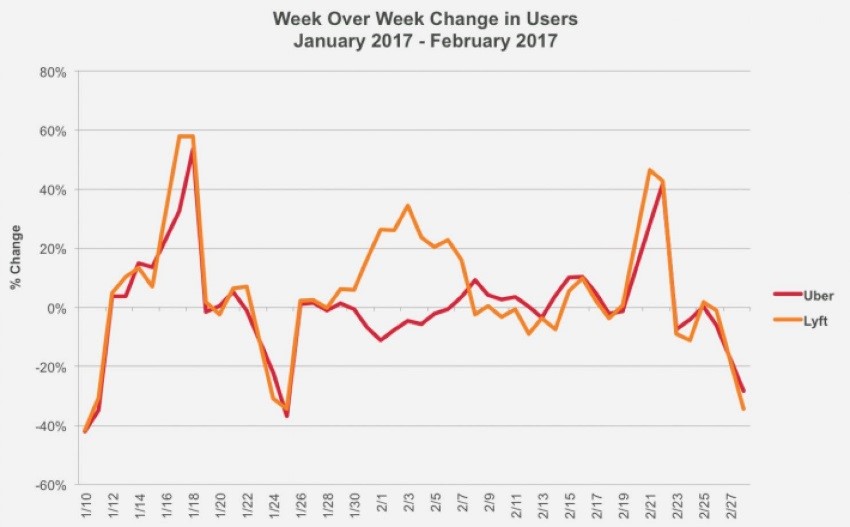
    As Uber’s user count decreased by the thousands, Lyft strategized ways to capitalize on the opportunity, taking the high road with tasteful response tactics. When #DeleteUber was first initiated after the immigration ban, Lyft pledged $1 million to the American Civil Liberties Union resulting in a 30 percent increase in riders. Uber, meanwhile, had a 10 percent dip in riders around the same time, according to 1010data.

    Week over Week change in users
    via Washington Post

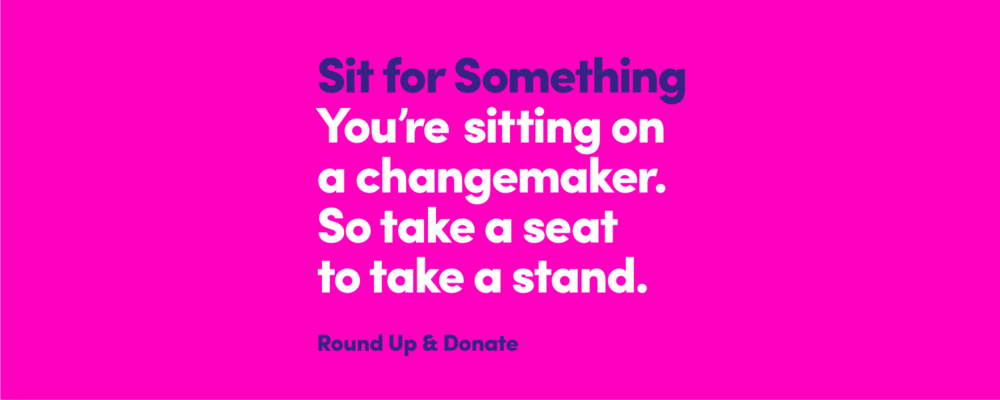
    Most recently, Lyft announced a new program “Round Up & Donate.” Users can opt-in to automatically round up their fare to the nearest dollar and donate it to charity. In a world where “good is the new cool” and younger generations demand increased social responsibility from brands, this was a smart move. Personally, I feel more inclined to request a ride from Lyft over Uber knowing the brand’s commitment to citizenship.

     width=

    While Lyft executives assure the public they are not changing their marketing and PR strategy in response to Uber’s misfortune, it sure is convenient timing. Who knows, this assurance may even be another tactic to paint Lyft in a positive light. For me, it’s working. Lyft headlines are overwhelmingly positive while Uber’s media perception continues to diminish, despite daily efforts to publicly reevaluate their corporate values. We’ll have to watch closely as the underdog Lyft takes on Uber in a classic tale of “good” vs. “evil.” No matter the outcome, Lyft’s marketing and PR teams deserve a standing ovation for their performance lately.

    PR Lessons Learned

    We can all empathize with the PR teams for United and Uber, and many of us think about how we personally would have responded in those situations. A key takeaway here is that as PR professionals, you must first be in-tune to what is going on internally and externally. You must respond to the crisis or opportunity at hand very quickly. Whether that response is snarky or dignified, the public will take control of your message if you don’t, so preparation is key. At the bare minimum, know who needs to be involved in the decision-making process when crisis ensues because those designees will need to be called on immediately.

    Yes, you’ve got to move fast, but you’ve also got to be thoughtful and deeply consider the long-term impact a response will have on your company. Lyft, for example, aligned their thoughtful responses to the overall brand values, creating a strategy people could easily get behind. This two-steps-ahead thinking is what we call smart PR and what we strive for with our clients daily.

  • Let’s Get Real About PR Measurement & ROI

    Let’s Get Real About PR Measurement & ROI

    The question of how to measure the ROI of PR (and social media and influencer relations…) is as old as the industry itself. But we have collectively and consistently failed to come up with “the answer” that rings true to believers and satisfies skeptics. (Yes, both do exist!)

    The reason we have failed isn’t because we are lazy or stupid or unwilling to be accountable. It’s because the formulaic approach to calculating ROI is misguided when trying to measure the drivers of something as complex and psychological as human behavior.

    There will always be a – perhaps significant – portion of PR, social and marketing’s impact that is hidden or unknowable. Consider:

    • you read a review for hiking boots in Backpacker magazine and go buy them at REI
    • a prospect reads your insightful contributed article and enters a sales meeting more pre-disposed to work with your company
    • a friend @s an Instagram post to you and you buy that brand’s product

    The list could be thousands of bullets long. And, frankly, the real impact comes from the cumulative effect, but you get the point.

    (If you are interested in a deeper dive on the concept, check out Alex Madrigal’s piece in the Atlantic on dark social. Even though he’s referring only to social, the tenets of the argument are the same.)

    So, I guess we should just punt.

    Of course not. While it’s a fool’s errand to try to “prove ROI” in the typical attribution-based model espoused by many of today’s analytics companies and digital marketing gurus (I just vomited in my mouth a little bit typing that), we still should attempt to unmask as much impact of our work on business goals as possible.

    With the tools available today, we have more metrics at our fingertips than ever before. But rather than falling into the trap of positioning program metrics (impressions, coverage, sentiment, SOV, social engagement, etc.) as proof of moving the business needle, we must treat them as what they are: really valuable leading indicators.

    Just as while the Consumer Confidence Index does not in and of itself prove the economy is healthy, it is a hugely important area to measure and often predictive of the economy’s performance.

    I believe that, viewed in this context, the measurement discussion becomes both more fair (un-attributable value is captured) and more credible (no longer must we stumble through a non-answer when a client says “So, what?” to our report of generating a bajillion impressions and engagements).
    Up, next…a model for putting the pieces together.

  • Do LinkedIn’s New Profile Updates Matter for Brands & B2B Marketing?

    Do LinkedIn’s New Profile Updates Matter for Brands & B2B Marketing?

    By now, you’ve likely noticed things are changing on LinkedIn – big time. This is the largest update for the platform since its initial launch. Navigation is more streamlined, the search bar has been optimized, you’re receiving personalized suggestions to make your profile stand out, and more. These changes are designed to make the platform easier to use, and more attractive to the average user.

    Don’t write this off as just a little profile redesign – this major change from LinkedIn has real implications for brands. It has the potential to impact how you plan B2B social media campaigns, and here’s why:

    This Is a Power Play to Attract More Active Users

    These updates go far beyond prettying things up, this is a calculated move by LinkedIn to engage users and get them to return to the site much more frequently. This redesign solved many of the complaints users had about LinkedIn, including the major challenge that it was difficult to navigate. Now, as WIRED notes, the new LinkedIn looks a lot like Facebook – and that’s a smart move. Facebook has over 1,870 million active users, so it’s safe to assume most people know their way around the platform, and may now feel more comfortable using LinkedIn. LinkedIn also updated its newsfeed, adding trending topics and in-line messaging. These new features are all designed to keep users coming back and checking in regularly, something that LinkedIn has struggled with for years, falling behind more popular sites like Instagram, Twitter and Facebook.

    Why does this matter for brands? The simple answer is that there’s real potential that people are going to start using LinkedIn more often. That means there could soon be a much larger pool of people to reach on LinkedIn with your B2B marketing efforts. Previously, it often made sense to run paid social campaigns on Facebook instead of LinkedIn, for the (rational) reasoning that business decision makers are more consistently active there. Now, it might be time to pause, and reconsider LinkedIn. We’ll see what this year holds, but LinkedIn is hoping its active user numbers won’t be stagnant for much longer.

    New Opportunities to Showcase Your Brand and Company Thought Leadership

    Another major update from LinkedIn is a new and improved career page – which directly puts the spotlight on your brand’s company culture and leadership team. LinkedIn’s “Life” tab in particular is a compelling new addition. Through photos, videos, employee testimonials, company leader profiles and more, it’s easier than ever to paint the picture of what your brand represents and showcase that to the world. Good for hiring purposes, and great for brand reputation building.

    The new career page has other implications as well – especially for brands and agencies focusing on thought leadership, and diligently working to place opinion pieces from top executives. Thought leadership from executives can now be featured directly on your brand’s profile, via the “Life” tab. In addition to LinkedIn Pulse, this is a great way to get your brand’s voice out there, build brand reputation and get more eyes on the initiatives you’re working on. If your brand’s executives are active on LinkedIn and open to working with you to pen key thought leadership pieces or work on employee profiles, the time is now.

    2017 is shaping up to be a big year for LinkedIn! How are you enjoying the new profile set-up so far – does it inspire you to visit the site more often?

  • BBJ: Matter 3rd Largest Boston PR Agency

    BBJ: Matter 3rd Largest Boston PR Agency

    I’m thrilled that the Boston Business Journal recognized Matter as the third largest PR and social media firm in the Greater Boston area, and that we’ve enjoyed a steady upward trajectory for each year of our existence. It’s a testament to our tremendous staff and our agency’s enterprising spirit. But the story of our success is also intertwined with Boston’s emergence as a true innovation hub, and with a battery of entrepreneurial companies hell-bent on trying to make the world a better place. Matter shares this vision – that a rising tide raises all ships, and that together we are Boston Strong.

    We have clients all over the country, but nowhere do we have more insight and penetration into the local economy than in Massachusetts. And what I’ve seen over the past decade, in Boston in particular, is a sustained determination to seize the mantle as one of the world’s truly great centers of technology excellence. The energy is palpable. The optimism is abundant and the opportunities for startups to find a foothold have never been greater.

    Our Lunchspotting networking events in Boston are truly kinetic, with executives across myriad industries sharing success stories and forging new relationships. We can’t hire fast enough to fill our Boston office, which is barely a year old and bustling. While nothing is certain, here’s what I truly believe: Boston’s future has never been brighter, and Matter has never been more excited to be an integral part of the storytelling apparatus of this region’s outstanding companies.

  • A Newcomer’s Guide to Drone Videography

    A Newcomer’s Guide to Drone Videography

     At this day in age, it’s amazing to think that remote controlled drones (or UAVs) are becoming a part of everyday life. They can be seen in search and rescue applications, lighting scenarios, and of course aerial videography. When it comes to other places it can be useful, the sky is the limit (pun intended).


    Let me preface this write-up by stating that I am still a newcomer to the drone videography world. My goal for a while has been to learn any video rig I can get my hands on, and this is the most logical next step. The value in drone videography is obvious as well; shots from the sky add an interesting perspective to your video that simply cannot be replicated.

    At first I was under the impression that someone can go out and buy one of these and use it freely, similar to a remote controlled car- boy was I wrong. Here are a few tips and other things you should consider when becoming a drone enthusiast

    1. Start Small: A drone big enough for a camera complete with all the necessary batteries, prop guards, gimbal, and controllers will set you back at least a couple thousand dollars. Before making such a purchase, I found that buying this $70 drone is a great stepping-stone before graduating to the bigger contraptions. It helps with getting a feel for the controls, air resistance, and aerial maneuvering. It’s also inevitable that you’re going to have a few crash landings, which won’t damage it because of the small size (the drone in the link fits in the palm of your hand).
    1. Take a Class: Flying a drone is not a “plug and play” solution. There are important details such as calibration, course setting, home lock, airport communications, and many other things you need to know that can’t be summed up in a brief YouTube video. I found that taking an in-person course really helped me get familiar with both the drone and the app. The instructors are all licensed helicopter pilots who can address any other questions you may have, and there’s a block of class time that’s used for flight practice.
    1. Stay Current with Government Regulations: The FAA controls all of the airspace in our atmosphere. Whether it’s a few inches above your head or 400 feet off the ground, they are the ones who make the rules. It’s important to read up on their current and proposed regulations, so that you don’t get ticketed or fined for flying illegally. Right now, in order to make money from flying you’ll need to obtain an FAA 333 Exemption, or be a commercial airline pilot. While this paperwork can be easily applied for, it takes roughly six months for it to get approved and sent back. I’m writing this blog in June, and it’s been rumored that the FAA will be coming out with a separate set of drone pilot regulations this month. We’re still waiting on that, which leaves a lot of us commercial drone pilot hopefuls in limbo.
    1. Practice, Practice, Practice: Similar to the first tip I covered earlier in this blog, you can never have enough practice. After all, a great aerial shot cannot be achieved without great aerial maneuvering. Setup a chair or trash barrel in your yard and practice orbiting around it, with the nose of the drone constantly facing the subject. Once you’ve mastered that, give these a try.

    To sum it all up, it seems like drone flying is a hobby/professional tool that is here to stay. It’s an activity that should be done with safety as the number one concern, and enthusiasts should not rush to the finish line. I’ll leave you with my three favorite drone videos on YouTube (1) (2) (3). Happy flying!

    Fill out the form below to schedule a free strategy call with our team.